
The Nonprofit:
A nonprofit owned a large industrial building. Part of its mission was to rent affordable studio space to artists, photographers, smaller nonprofits, and other creative organizations.
The Incident:
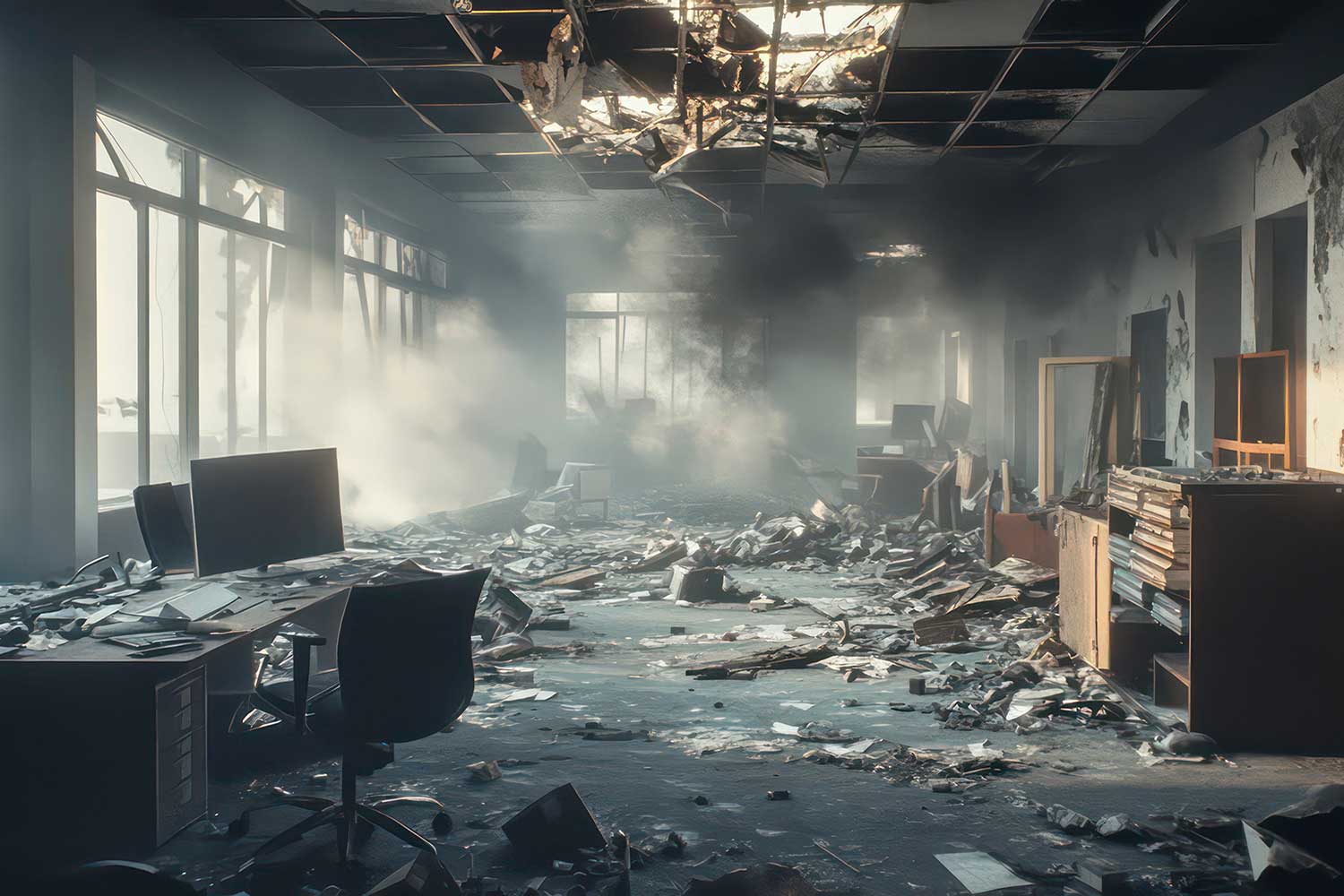
One night, a fire broke out in one of the larger rental spaces used by a group of artists. The building sustained significant fire and smoke damage, along with water damage from sprinkler activation and fire suppression efforts.
Several adjacent rental spaces and an elevator were also damaged and rendered unusable.
The following day, the nonprofit engaged a cleanup and mitigation contractor, who began work immediately.
The Coverage:
The nonprofit had purchased a Businessowners Property policy with Nonprofits Insurance Alliance (NIA) that included coverage for fire, smoke, and water damage.
After the fire, the nonprofit notified its insurance broker, and the claims process was initiated.
The Result:
Through the policy, NIA arranged for water mitigation and consulting experts to evaluate the damage and estimate repair costs.
The claim was paid, and recovery efforts were pursued against the tenant and their insurance carrier.
Things the Nonprofit Did Well:
The nonprofit had appropriate property coverage in place that included protection against fire, smoke, and water damage.
The building was equipped with a functioning fire suppression sprinkler system. The nonprofit also required tenants to carry insurance covering damage to leased premises while in the tenant’s care.
How Can Your Nonprofit Protect Itself?
Nonprofits that own or operate buildings sometimes consider how fire suppression systems are maintained, how tenant responsibilities are documented, how insurance requirements are incorporated into lease agreements, and how emergency response procedures are established.
Clear documentation, maintained safety systems, defined tenant responsibilities, and appropriate insurance coverage can help organizations respond more effectively if a fire occurs.
From the Claims Files stories are for general information only. They are simplified examples and do not guarantee coverage, a defense, or any specific outcome. Some losses described in this series may not be covered.
Coverage depends on the specific facts and on the terms, conditions, and exclusions in your policy. Contact your insurance broker or agent for guidance, and follow your policy’s claims reporting procedures if an incident may involve a claim.
This story is not legal, medical, financial, or professional advice. In an emergency, contact local emergency services first. Any risk management practices mentioned are general suggestions and may not apply to every nonprofit. Follow all applicable laws, licensing rules, and reporting requirements.