Nonprofits Create Community is NIA’s theme for 2026, as we celebrate the ways that nonprofits come through for their communities in spite of all the challenges facing them. In this series, meet some NIA-insured nonprofits who share their stories of creating community in their own words.
Meet A Radical Guide of Mi-Wuk Village, CA
Jason Bayless, Executive Director of A Radical Guide, explains:
“A Radical Guide connects people to liberation spaces and mutual-aid efforts, moves material support directly to grassroots projects, and shares tools, histories, and frameworks for collective liberation.”
How does your nonprofit and your mission create community for the people and places you serve?
Connecting like-minded people who may have believed they were alone.
“A Radical Guide (ARG) is a 501(c)(3) nonprofit that builds movement infrastructure, including a global directory of radical spaces, mutual aid programs, and educational resources for people doing or curious about liberation work around the world.
The problem our mission addresses is isolation. Across the world, people run community centers, infoshops, cooperative farms, mutual aid networks, and grassroots organizing projects.
This work is usually local, usually underfunded, and usually invisible to anyone who does not already know where to look. The people doing it often believe they are the only ones. The people looking for it often cannot find it, even when it exists a few miles from their home.
The directory exists to solve that. It maps radical spaces and projects in 95 countries so that anyone, anywhere, can look up what is near them and walk through the door. That is the whole idea.
Community starts when people can find each other, so we built the tool that lets them. Spaces in the directory attract visitors and members they would otherwise never reach. People who felt alone in their town learn there was a community there the whole time.
The number-one comment we hear from people is, “I never knew this was happening near me, and I can’t believe I found my people.”
The second most heard is, “It feels so good to see a group of people halfway across the world working on the same issue I am in my small town; it proves we are not alone in this work.”
We build relationships the same way, one person at a time. When someone signs up for our newsletter, the first thing we send is a question. What drew you here, and what are you working on where you live?
A person on our team reads every reply and writes back, and from that exchange, conversations grow into relationships.
The proof is in what people write back. One woman wrote this week that knowing we and others are out here gives her the strength to keep going. Another reader responded to a newsletter with five words, “we were made for this.” A third had read quietly for years and wrote in for the first time just to say he had been with us the whole time.
Being seen by someone doing the same work is itself a form of community, and for some people, it is the first form they find.
Finding each other is the beginning of community. What makes it real is what people do next. They take care of each other. That is what mutual aid means, members of a community meeting each other’s needs directly, and it requires a way to move money.
Our Mutual Aid General Fund sends $550 every month to a grassroots group, and we have never missed a month; 100% goes to the group, and we keep none of it. The groups it has supported are the kind that hold neighborhoods together, tenant unions, community food tables, a homeless union, street medics, and migrant solidarity organizers.
Our Farmworker Rental Assistance Program moves rent money directly to farmworker families in California.
Our Financial Solidarity Project gives small grassroots projects a place to receive donations.
Each project gets its own donation page through ARG, everything that comes in transfers to them at the end of the month, and we amplify their work through our blog, newsletter, podcasts, and social media, so more people find them.
The two projects it supports today show the range of the communities this reaches.
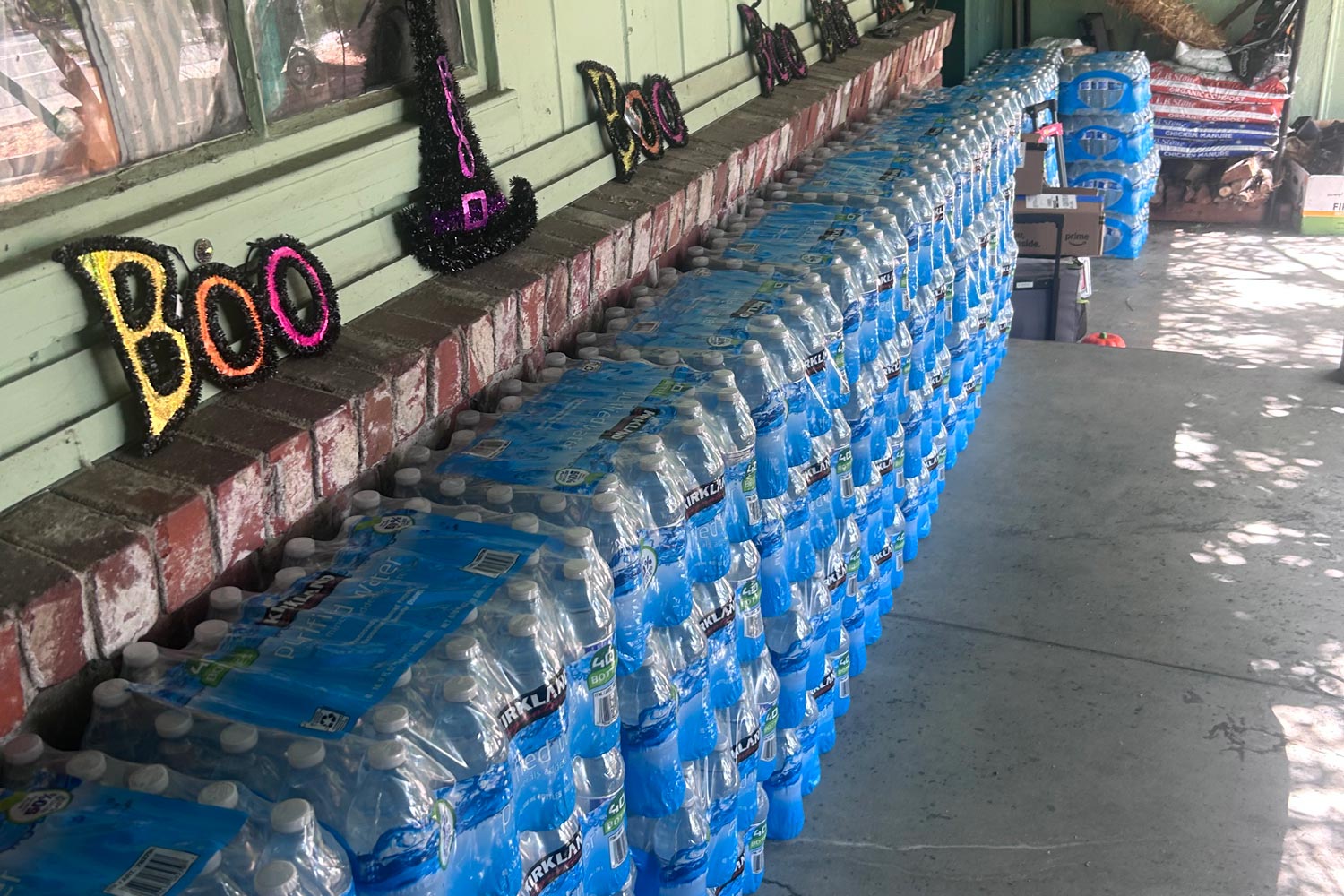
Dandelion Seeds is a volunteer group that brings street meals, water, and harm-reduction supplies to unhoused neighbors in South Sacramento.
General Strike U.S. is a national network organizing across the country. This support has crossed borders too; we raised funds for an eco-anarchist land and community project in Davao, Philippines. Movement money stays within the movement, wherever it is.
A Radical Guide is one small node in a long history of people organizing against oppression and building better ways to live together. We help people find each other. Some of them, later, count us among the people they found.”
What are your nonprofit’s biggest challenges or obstacles to creating community?
Helping build community, without shaping it from the outside.
“The biggest obstacle is what people have been taught. Most of us grew up learning one model for how life gets organized, competition, extraction, power, and wealth pooling at the top, and we learned it as if nothing else existed.
Movement history rarely makes it into our education, and when it does, it gets told as the story of one heroic individual, with the collective that made them possible cut out of the frame.
So, most people have never seen another way of being together. Not because it does not exist. Because no one showed them. That is hard to work against, because it is hard to show someone something they have never seen.
This is why we put so much into the directory, educational resources, workshops, and panels. Each one is a way of saying, “Look, this is real, it is happening, and some of it is happening near you.”
Before people can find each other, they have to know there is something to find.
The second obstacle is that there is no template: Community looks different for every group and every place, because it grows out of who those people are. We cannot hand anyone a model, and we do not want to. Communities build themselves.
So, the question we constantly sit with is how to build infrastructure that supports what a community is already becoming, without shaping it from the outside. We do not always get that right, and the answer keeps changing, which is part of the work.”
A broker’s take on community in action.
Before a nonprofit can help build community, they need insurance — and brokers are their guide to helping them find coverage, maintain it, and, if needed, make a claim on it.
A Radical Guide partners with Egan Gost, a broker with Kerber Gost Insurance Agency, who helps them get the most value from their NIA coverage.
As their broker, Gost shared his insight into the benefit A Radical Guide brings to the community:
“A Radical Guide is an inspiring and valuable resource for anyone looking to connect with grassroots organizations, community-led initiatives, and people working to create meaningful change.
“What stands out is its commitment to making connections, sharing practical tools, and supporting mutual aid and community organizing.
By bringing these efforts together in one accessible platform, A Radical Guide helps make it easier for people to discover, learn from, and support the important work happening in communities around the world. It is a thoughtful and genuinely impactful organization.”