
Nonprofits Create Community is NIA’s theme for 2026, as we celebrate the ways that nonprofits come through for their communities in spite of all the challenges facing them. In this series, meet some NIA-insured nonprofits who share their stories of creating community in their own words.
Meet ThruGUIDANCE Ministries of Hawthorne, CA
Kendal R. Troutman, Founder and Executive Director of ThruGUIDANCE Ministries, explains:
“At ThruGUIDANCE, we make small worlds bigger for youth in underserved cities through ice sports, dance and education.”
How does your nonprofit and your mission create community for the people and places you serve?
Creating spaces where belonging feels natural — because it is.
“Community is who we are. Ice sports, dance, and education are simply what we do. At ThruGUIDANCE Ministries, everything we build, every program, every event, every relationship, is rooted in that truth.
We don’t show up transactionally. We show up as neighbors, as advocates, as people who are genuinely invested in the families and community leaders we serve alongside. That’s not a strategy. That’s just who we are.
What we create together is grounded in trust, belonging, and a sense of pride that doesn’t need to be performed. It just needs space to exist. We help open those spaces.
And when our families step into rooms and opportunities they’ve never been in before, they don’t arrive as outsiders. They arrive as themselves, fully and authentically, carrying the resilience and pride of the communities they come from.
That’s the community we’re building. One where our kids, our families, and our neighborhoods know they belong, not because someone let them in, but because they were never meant to be kept out.”
What are your nonprofit’s biggest challenges or obstacles to creating community?
Building trust with communities that have been let down in the past.
“The communities we serve have been let down before: By systems, by organizations, by people who showed up with good intentions and then disappeared.
So, one of our greatest challenges isn’t logistics or funding alone, it is earning and keeping trust in spaces where trust has historically been broken. We don’t take that lightly. We earn it slowly, relationally, and we protect it fiercely.
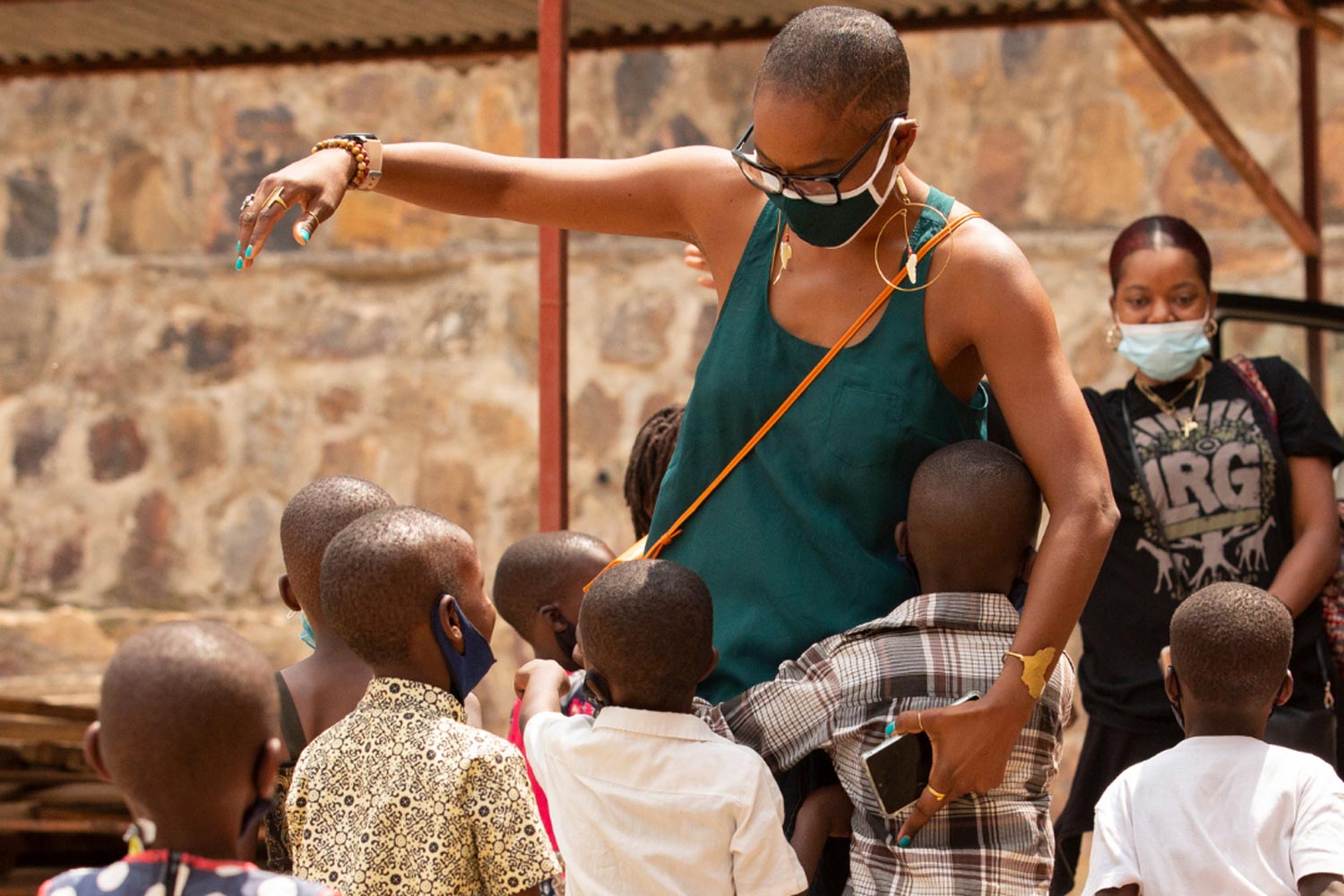
Access is another real barrier. Whether we are working in Los Angeles County or Rwanda, the youth and families we serve are often navigating environments where resources are scarce, transportation is limited, and time is stretched thin. Getting to the table is hard when survival takes up most of the day.
And then there is the challenge of showing up in spaces that were not built with our communities in mind.
We empower our families to walk into those rooms authentically, with pride and confidence, but that work requires us to constantly push against systems and structures that were never designed to include us.
Finally, doing this work across two continents means staying deeply rooted in cultural context.
Community is not one size fits all. What builds trust and belonging in Kigali looks different than what builds it in South LA — and honoring that difference while holding one unified mission is both our greatest challenge and our greatest strength.”